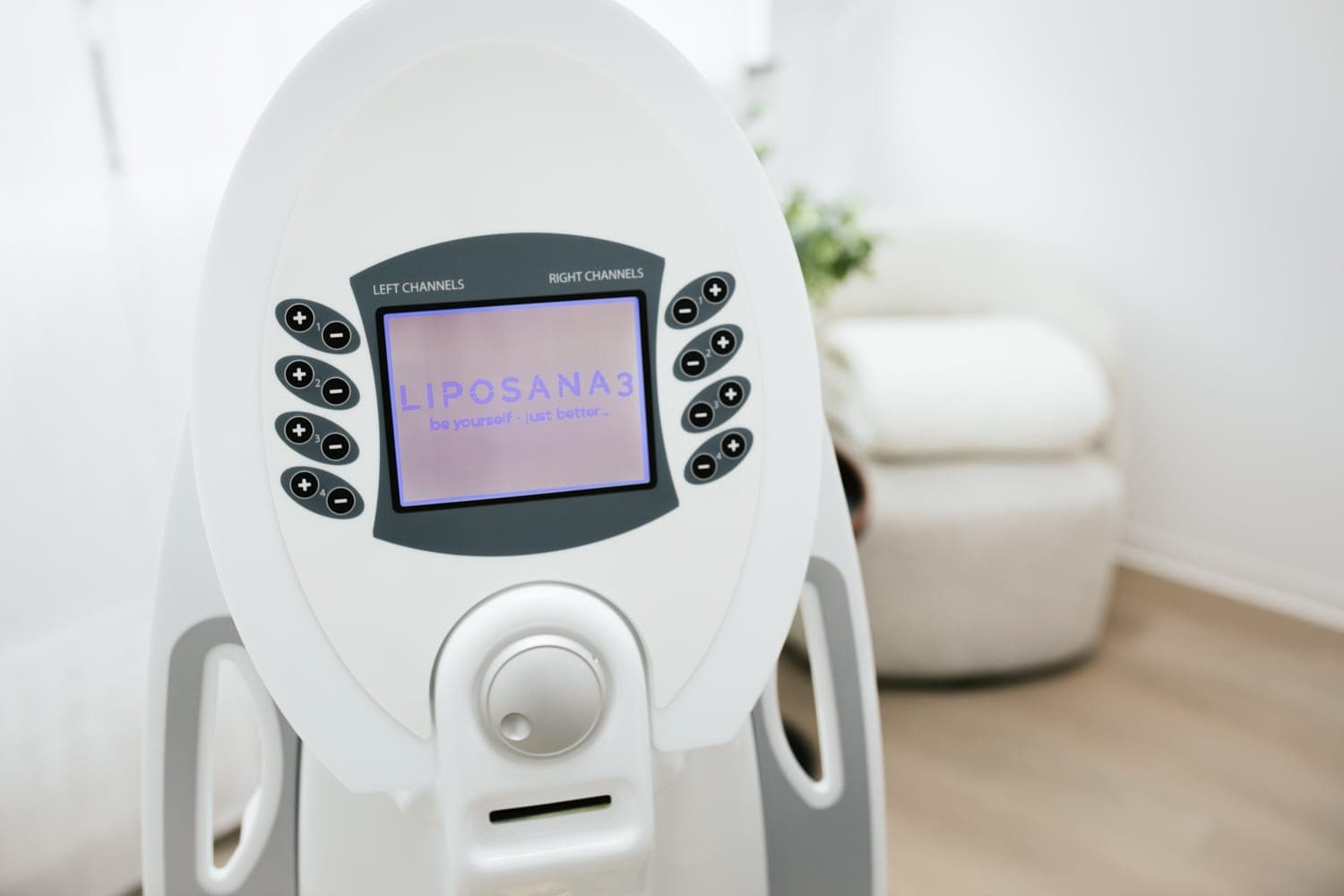
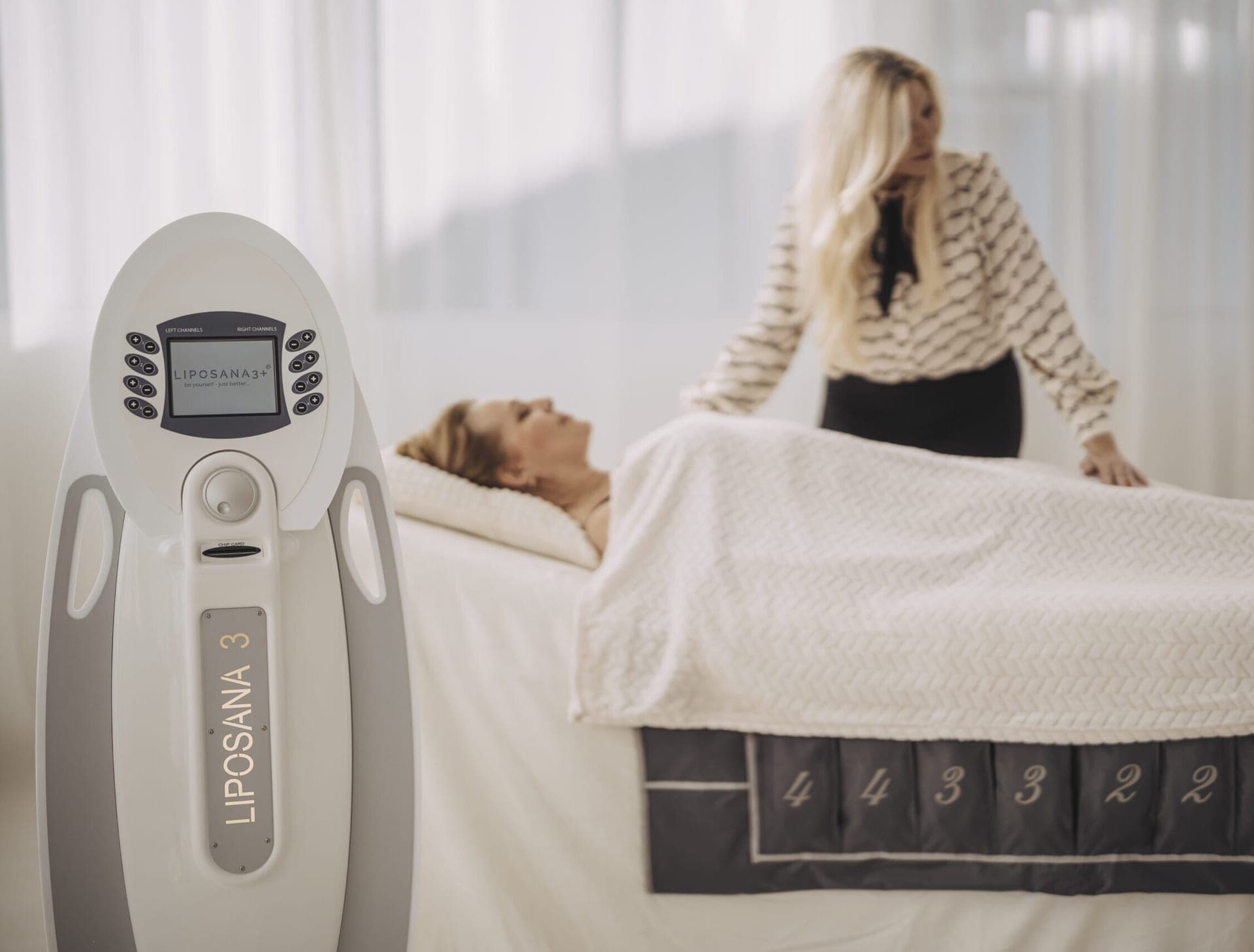
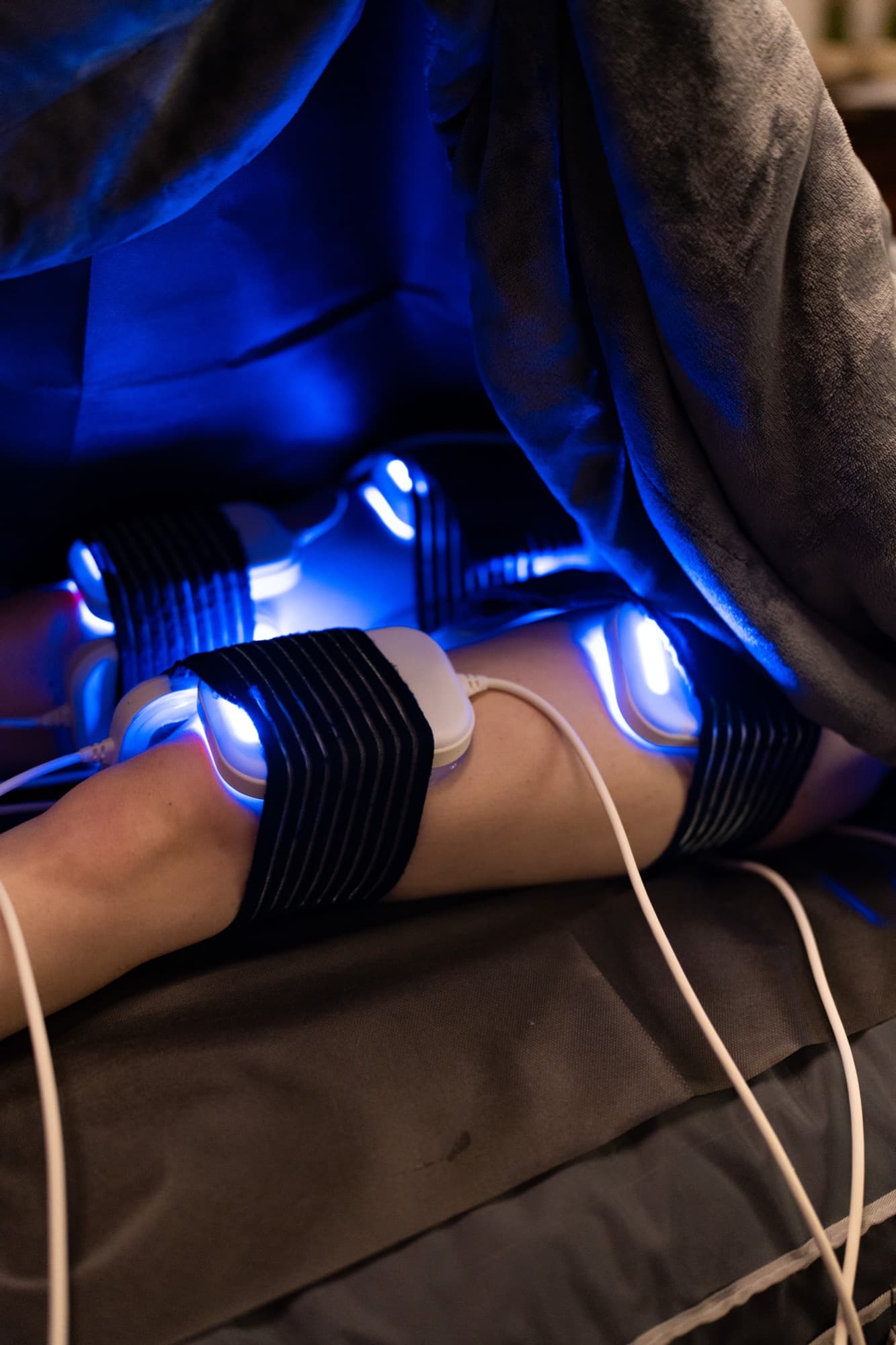
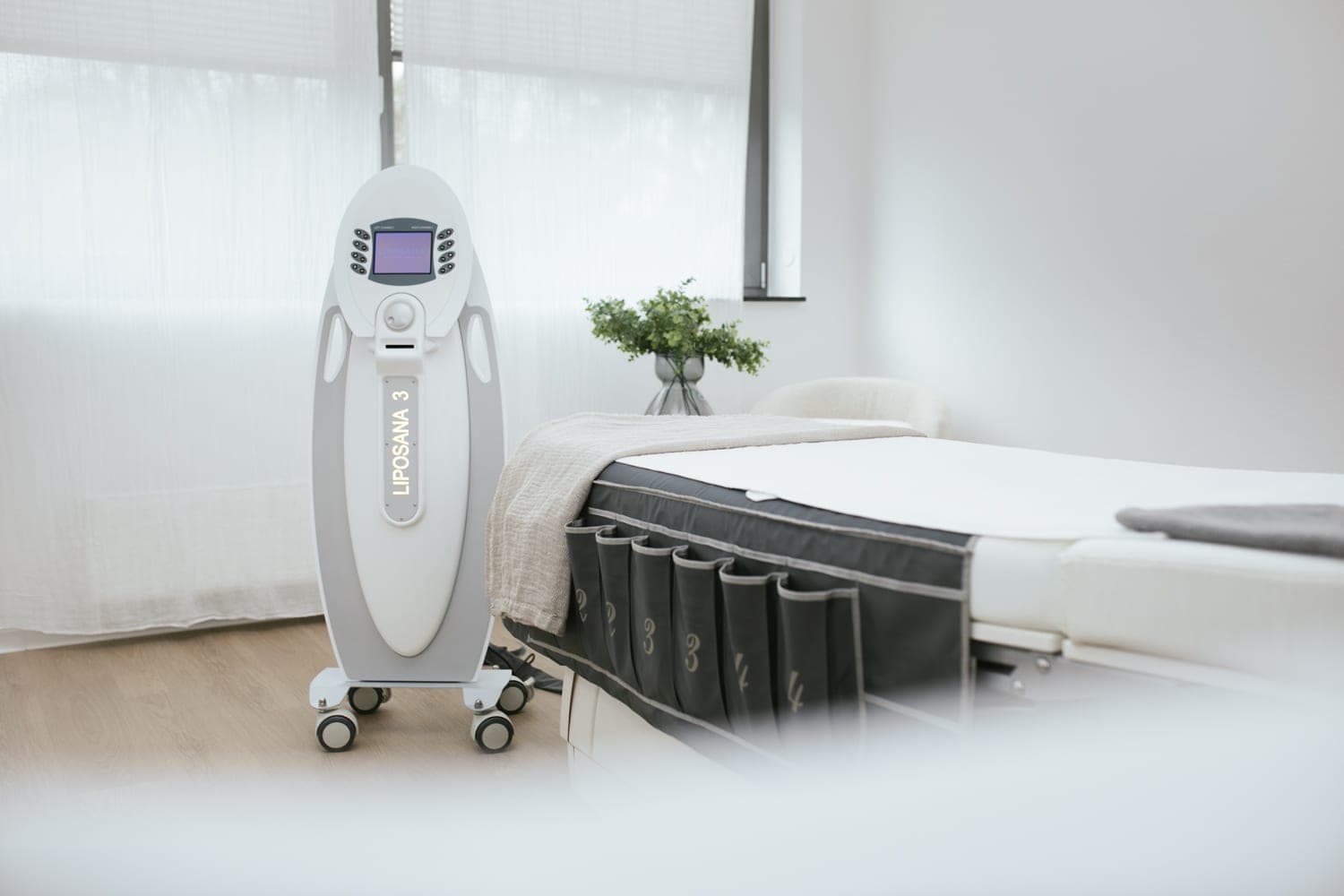
Naturally, we are often asked what role the so-called Kotz currents play in LIPOSANA3®. This type of stimulation is also often referred to as Russian stimulation. Electrical muscle stimulation has become an important tool in recent years for rehabilitating muscles after injuries or operations. One method of electrical stimulation is the so-called “Russian electrical stimulation”, also known as “Kotz currents”. Russian electrical stimulation uses a particular type of electrical stimulation, the square wave, and modulates it with specific frequencies to stimulate the muscles. These make up part of the frequency spectrum generated in LIPOSANA3® and LIPOSANA3®+.
“Russian electrical stimulation” with Kotz currents was developed in the 1980s by the German physiotherapist Dr. Y. Kotz. It is believed that he developed the method to improve the rehabilitation of athletes and to maximise the effects of sports training. Dr. Kotz experimented with various forms of electrical stimulation and found that using square waves at certain frequencies was particularly effective for increasing muscle strength and mass and for relieving pain. Since then, the method has been used by physiotherapists, sports coaches and athletes worldwide. The most important finding is that modulating medium-frequency currents onto low frequencies is helpful for the treatment areas mentioned above. We have written a separate article on the topic of modulation:
What role does modulation play in LIPOSANA3® and LIPOSANA3®+
Square wave – Kotz current
The square wave is a form of electrical stimulation produced by a particular type of signal that switches back and forth between two voltage values at regular intervals. The square wave has a fast rise and fall time and therefore produces fast and intense contractions in the muscles. This fast contraction is ideal for stimulating the fast-twitch muscle fibres needed for activities such as running and jumping.
Kotz currents use the square wave to produce a high number of contractions per second. This high frequency leads to intense stimulation of the muscles and can lead to an improvement in muscle strength and mass.
Which frequencies are used for this?
Russian electrical stimulation uses specific frequencies to stimulate the muscles. The frequencies are produced by modulating the square wave, with the frequency of the square wave being modulated by a higher frequency. Kotz currents are usually modulated at a frequency of 1 kHz and can be combined with various lower frequencies.
Here are the most important frequencies used with Kotz currents:
1 kHz modulated at 33/66/133/200 Hz
Kotz currents at 1 kHz modulated at 33/66/133/200 Hz are ideal for stimulating the muscles to build strength and mass. The lower frequencies (33-66 Hz) produce deep muscle contractions and are therefore ideal for stimulating the slow-twitch muscle fibres. The higher frequencies (133-200 Hz) produce faster contractions and are therefore ideal for stimulating the fast-twitch muscle fibres.
2500/4000/5000 Hz modulated at 4/6/8/12/50/75/100 Hz
Kotz currents at 2500/4000/5000 Hz modulated at 4/6/8/12/50/75/100 Hz are often used for pain relief and muscle relaxation. The higher frequencies (50-100 Hz) produce fast and intense muscle contractions that can relax the muscles and reduce pain.
In summary, Kotz currents are a special type of electrical stimulation that uses the square wave to produce muscle contractions and specific frequencies to stimulate the muscles. They are often used by athletes and fitness enthusiasts to improve muscle strength and mass, and by therapists to rehabilitate muscles after injuries or operations.
However, it is important to note that the use of Kotz currents and other types of electrical stimulation may be contraindicated in some cases and should therefore only be carried out under the supervision of a qualified therapist or doctor. It is also important to use the correct technique and the right settings for the patient's specific needs in order to achieve maximum results and avoid injuries.
There are many studies that support the effectiveness of Kotz currents in improving muscle strength and mass as well as in relieving pain and relaxing muscles. However, the results are not always consistent, and further research is needed to determine the long-term effects and the optimal use of Kotz currents.
Note: This article is for general information only and does not replace medical advice, diagnosis or treatment.