

Skin & Ultrasound
How Is the Ultrasound in LIPOSANA3® Generated?
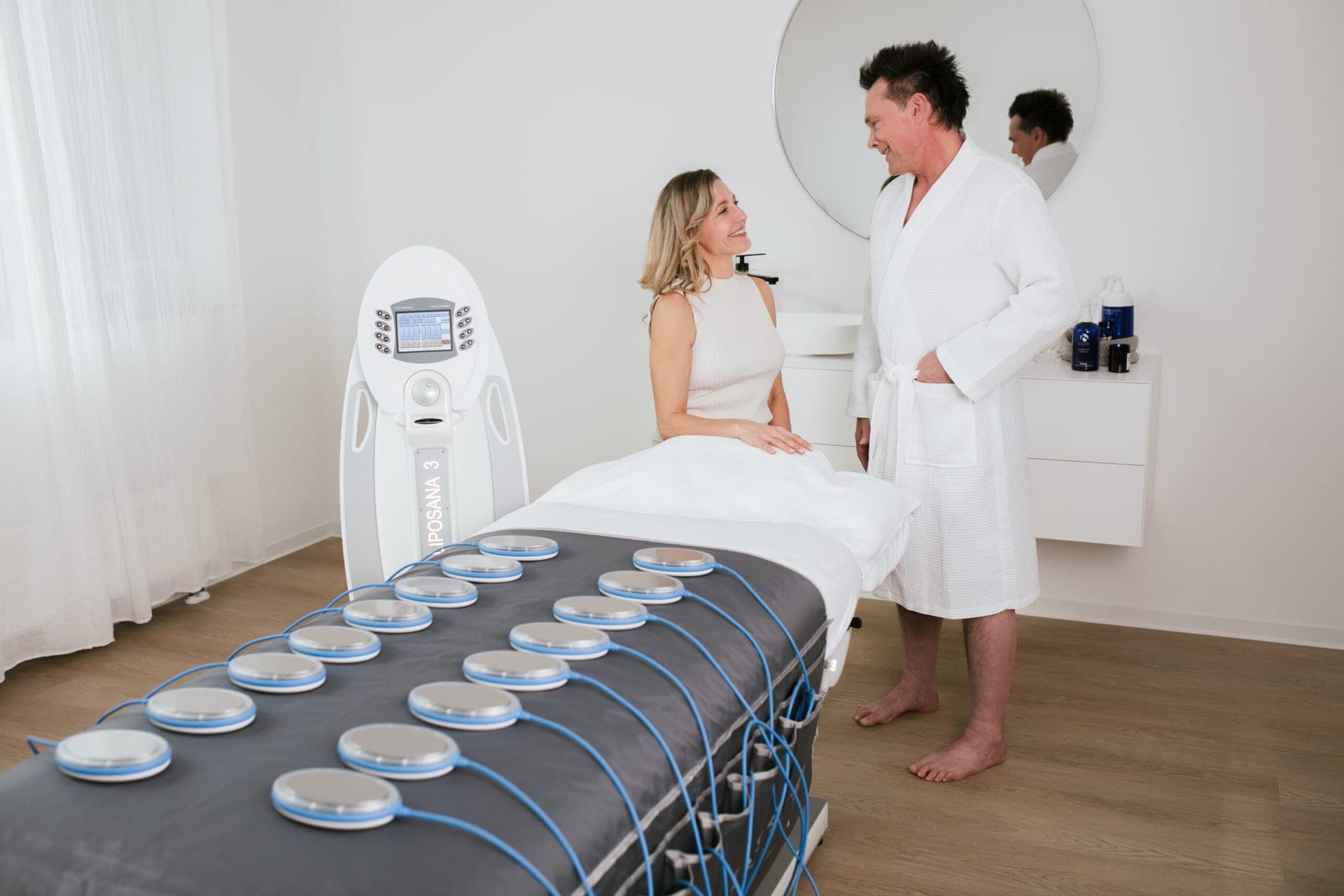
How are 3 MHz ultrasound waves generated? From the piezoelectric material to the sound wave, explained step by step.
Can 3 MHz ultrasound improve the appearance of the skin? A look at studies on skin elasticity and skin appearance.

An interesting question in connection with ultrasound is whether ultrasound at a frequency of 3 MHz (the ultrasound in our LIPOSANA3® works at 3 MHz) can improve the complexion. A number of studies have addressed this question.
A study from 2015 investigated the effects of ultrasound at a frequency of 3 MHz on the complexion of middle-aged women. The results of the study showed that ultrasound was able to bring about a significant improvement in skin elasticity and a reduction in wrinkles and fine lines.
Another study from 2018 investigated the effects of ultrasound at a frequency of 3 MHz on the complexion of patients with acne. The results of the study showed that ultrasound was able to help reduce acne symptoms and improve the complexion.
There are also a number of devices on the market that use ultrasound at a frequency of 3 MHz to improve the complexion. These devices are intended to improve blood circulation in the skin, stimulate collagen production and thereby lead to firmer and smoother skin.
It should be noted, however, that ultrasound alone is not enough to improve the complexion in the long term. A healthy diet, sufficient sleep and good skincare are also important factors for maintaining healthy and beautiful skin.
In summary, ultrasound at a frequency of 3 MHz can be a promising method for improving the complexion. There are studies that show a positive effect on skin elasticity, wrinkle reduction and acne symptoms. However, it is important that ultrasound is not regarded as the sole measure for improving the skin, but is used in combination with a healthy lifestyle and skincare.
The studies
It should be noted, however, that there are further studies on this topic and that research in this field is not yet complete.
Note: This article is for general information only and does not replace medical advice, diagnosis or treatment.
Read more
Skin & Ultrasound
How are 3 MHz ultrasound waves generated? From the piezoelectric material to the sound wave, explained step by step.
Skin & Ultrasound
Why frequency determines penetration depth and why LIPOSANA3® works with a fixed frequency of 3 MHz.

Body & Metabolism
After 40, the body responds differently: hormones, metabolism, the lymphatic system and stress interact. An overview of the hidden causes.