

Skin & Ultrasound
Can Ultrasound Improve the Appearance of Your Skin?
Can 3 MHz ultrasound improve the appearance of the skin? A look at studies on skin elasticity and skin appearance.
How are 3 MHz ultrasound waves generated? From the piezoelectric material to the sound wave, explained step by step.
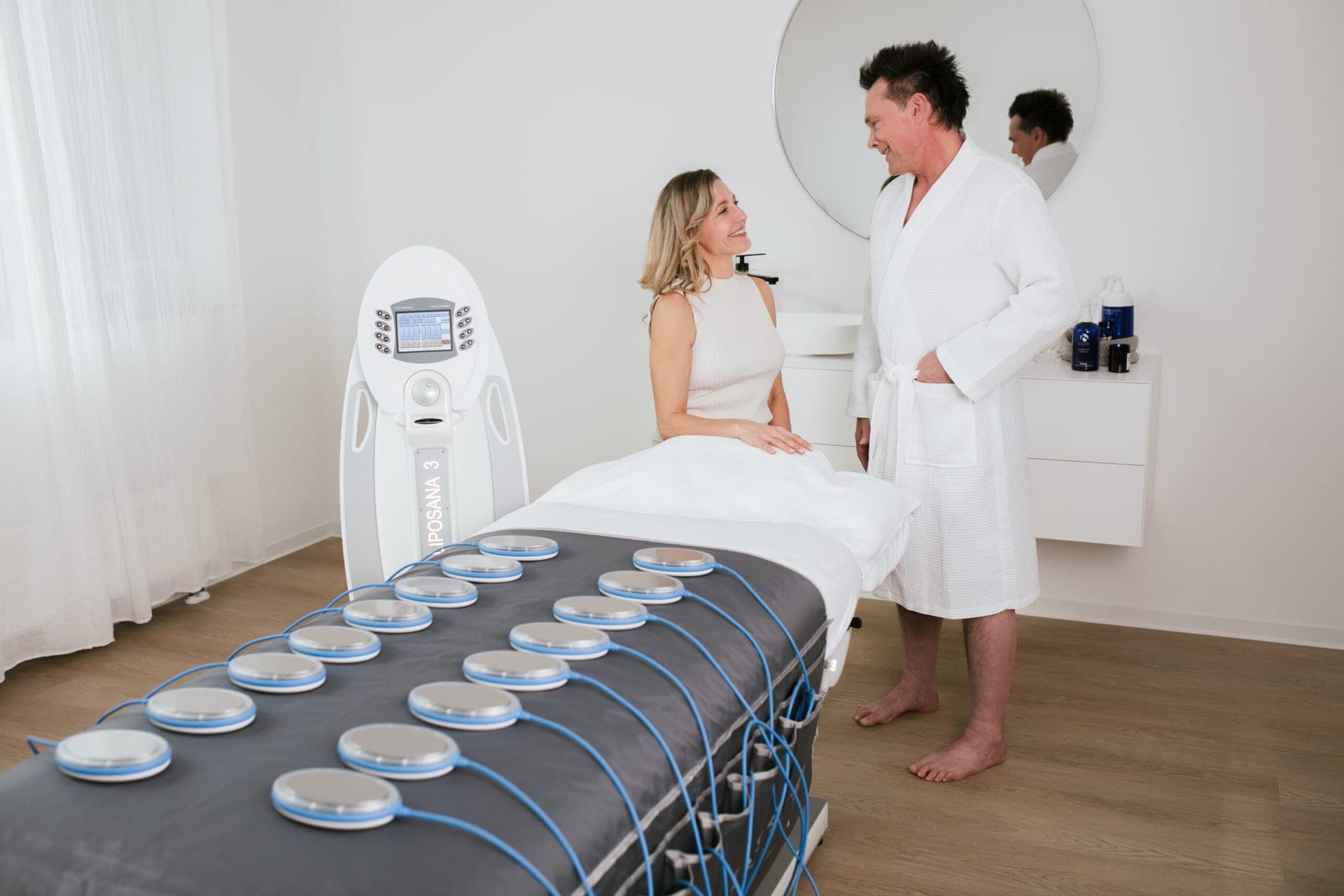
Ultrasound waves with a frequency of 3 MHz are usually generated using a piezoelectric material. This material converts electrical energy into mechanical vibrations, which then generate ultrasound waves. The process of generating 3 MHz ultrasound waves comprises the following steps:
The entire process takes place in an ultrasound transducer, also known as an ultrasound probe. These probes are available in various sizes and shapes to cover different examination purposes and areas.
Note: This article is for general information only and does not replace medical advice, diagnosis or treatment.
Read more

Skin & Ultrasound
Can 3 MHz ultrasound improve the appearance of the skin? A look at studies on skin elasticity and skin appearance.

Skin & Ultrasound
Why frequency determines penetration depth and why LIPOSANA3® works with a fixed frequency of 3 MHz.

Body & Metabolism
After 40, the body responds differently: hormones, metabolism, the lymphatic system and stress interact. An overview of the hidden causes.